If you’ve ever had a custom carbon steel turned part fabricated, you know that patience isn’t just a virtue—it’s a non-negotiable part of getting a component that fits your exact specifications, tolerances, and performance needs. As a supplier who’s spent the last 12 years in this space, I’ve heard every version of the same question from my customers: “How long is this going to take?” Carbon Steel Turned Parts
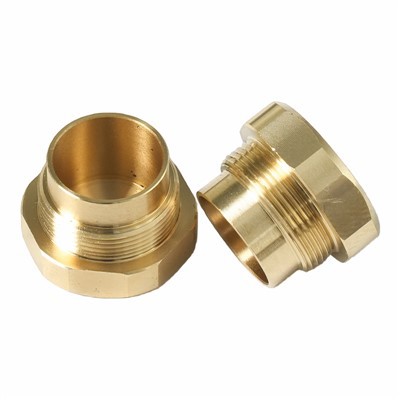
The truth is, there’s no one-size-fits-all answer. I’ve quoted jobs that turned around in 7 days and others that took 10 weeks, and the gap rarely has to do with how busy I am (though workload plays a part) or how fancy my machines are (we run CNC lathes with 0.0001-inch tolerance capability, which is state-of-the-art). It boils down to the decisions we make together at the very start of a project, the inherent properties of carbon steel itself, and the thousands of small, non-negotiable steps that turn a 2D drawing into a part that works.
Let’s break this down step by step, because I’ve found that customers who understand the process get better, faster results—and fewer headaches when their part is running through their assembly line.
First: The Discovery Phase That’s Not As Simple As It Sounds
Most customers come to me with a drawing, a BOM number, or a vague idea like “I need a shaft that holds a gear for a pump.” That’s a start, but custom turned carbon steel parts don’t exist in a vacuum. The first conversation I have is about what the part actually has to do, because that dictates almost every timeline factor.
Let’s say a customer needs a custom turned valve stem. If that stem is going to sit in a municipal water system, it can’t just be any carbon steel—it needs to be a low-carbon grade with corrosion resistance, because exposure to chlorine and running water will eat through a standard mild steel part in a year. If it’s going into a high-pressure hydraulic system on a construction vehicle, it needs a medium-carbon grade that can handle 5,000 PSI without bending. Even something as small as a notch for a retaining ring might require a different grade that’s easier to machine without cracking during the turning process.
This discovery step can take anywhere from 1 day to 3 days, depending on how clear the customer is on their part’s purpose. I’ve had customers bring me a fully finished, annotated CAD file with material grades specified, tolerances marked, and even a prototype to reference—those jobs move 2-3 days faster right out the gate. I’ve also had customers send a blurry phone photo of a broken part, and we spend 2 hours on the phone figuring out why it broke, what it’s made of, and how to make a replacement that won’t fail under the same load. That time is never wasted, but it does add to the total timeline.
Once we lock in the material, that’s when the next big factor comes in: carbon steel’s unique properties. Unlike aluminum, which is soft and machines like butter, or stainless steel, which is tough but predictable, carbon steel has a range of grades that behave very differently. High-carbon steel, for example, is much harder than mild steel—but it’s also more prone to warping during turning if we don’t set our machine parameters correctly. Last year, a customer came to me with a custom turned pin made from 1095 high-carbon steel, and we had to adjust our cutting speed by 15% and our tool feed by 0.005 inches to avoid leaving a rough surface or causing micro-cracks in the material. That adjustment added 2 days to their timeline, because we had to run a test part first before committing to the full order.
The Design & Engineering Review: Where Most Delays Sneak In
Here’s the part that surprises first-time customers: even if we agree on the material and the part’s function, we don’t just jump straight to production. Every custom turned part has tolerances—those tiny measurements that mean the difference between a part that fits perfectly and one that jams a $10,000 assembly. A customer might mark a 0.010-inch tolerance on a diameter, which is standard, but if they mark a 0.001-inch tolerance on a 6-inch length, that changes everything.
Carbon steel is a rigid material, but it still expands and contracts with temperature changes. If we machine a part to a perfect 0.001-inch tolerance at 70 degrees Fahrenheit, and that part is going to be used in a factory that runs at 95 degrees, it will expand by 0.002 inches, and suddenly it’s too tight for its intended bore. That’s a problem that can cause millions of dollars in downtime for a customer, so we have to account for thermal expansion during the design review. This step isn’t red tape—it’s how we avoid costly mistakes later.
For simple parts with loose tolerances (like a 2-inch shaft for a garden tool), this review takes 1 day. For complex parts with multiple features, tight tolerances, and specific finish requirements (like a turned gear hub with a spline that has to mate perfectly with a custom bearing), this review can take up to a week. Last quarter, I worked on a custom hydraulic cylinder rod for a agriculture equipment manufacturer that had 12 separate turned features, a 0.002-inch tolerance on the main diameter, and a polished surface finish to prevent seal wear. The engineering review took 5 days, because we had to run simulations on how the rod would hold up under constant cyclic loading, adjust the tool path to avoid vibration during turning, and confirm that the material would meet the customer’s 10,000-hour lifespan requirement. That review time didn’t delay the final part—it ensured that the part wouldn’t fail 6 months after installation, which would have cost the farmer way more than the extra 5 days.
Production: The Hands-On Work That Can’t Be Rushed
Once we sign off on the design, material, and tolerances, it’s time for production. This is where most customers expect 1-2 days of work, but carbon steel turned parts have their own set of constraints here. Let’s break it down by order size, because that’s the biggest factor in production time.
For a prototype order (1-5 parts), we first run a single test part. This is non-negotiable for custom work, even for repeat customers. The test part goes through every step of the process: cutting the material, loading it into the CNC lathe, turning all the features to spec, deburring, and inspecting with coordinate measuring machines (CMM) to confirm tolerances. For a simple prototype, this takes 2 days. For a complex prototype with tight tolerances, it can take 3-4 days, because we might have to adjust the tool path multiple times if the test part comes off the lathe with a slight taper or a surface finish that’s too rough. Last year, a customer ordered 3 prototype carbon steel pins for a medical device, and the first test part had a 0.0015-inch taper on the tip, which would have made it impossible to insert into the device’s housing. We adjusted the lathe’s tool offset and ran a second test part, which passed inspection, adding 2 extra days to the prototype timeline. That’s the kind of adjustment you can’t make on a production run, so building in time for prototypes is a given.
For small production orders (10-50 parts), after the prototype is approved, production takes 3-5 days. CNC lathes can run carbon steel parts at high speeds, but we have to pause every so often to check part tolerances mid-run, because tool wear can cause gradual shifts in measurements. For example, if we’re turning a 4-inch diameter shaft, the cutting tool will wear slightly as it cuts through the carbon steel, so every 5 parts we stop and measure the diameter to make sure it’s still within tolerance. For 50 parts, that means 10 mid-run checks, which add a bit of time, but it’s how we ensure every part is consistent.
For medium to large production orders (100+ parts), the timeline shifts to 5-10 days, not just because we’re making more parts, but because we have to set up multiple lathes if the order is large enough, and we have to account for secondary processes. Carbon steel parts often need secondary work: heat treatment to increase hardness, surface coating (like zinc plating or black oxide) to prevent corrosion, or deburring to remove sharp edges from the turning process. Heat treatment alone can take 1-2 days, because we have to heat the parts to a precise temperature (usually 1,500-2,000 degrees Fahrenheit) and cool them at a controlled rate to avoid brittleness. Last month, a customer ordered 500 custom turned carbon steel washers for an automotive brake system, which needed a black oxide coating to resist rust. The washers took 2 days to turn, 1 day to heat treat, 1 day for coating, and half a day for final inspection—total of 4.5 days, which is right in line with our timeline for a medium production order.
The Wildcards That Throw Off Timelines (And How We Avoid Them)
Even with all the planning, there are factors that can push a timeline back, and most of them are avoidable if we communicate early. The biggest wildcard is material lead time. If a customer orders a standard mild carbon steel like 1018, we can have that material in our shop in 1 day. If they order a specialty carbon steel like 4140 pre-hardened, which is used for high-stress parts, that material can take 3-5 days to source from our steel supplier, especially if there’s a high demand for it. Last spring, there was a global shortage of alloy steels, and a customer’s custom turned gear blank made from 4140 took 7 days to arrive, adding 5 days to their total timeline. We adjusted by sourcing a secondary supplier with a small stock of the material, but that’s a risk we can’t always plan for.
Another wildcard is inspection and quality control. For custom parts that go into critical applications (like aerospace, medical, or defense), we have to do full 100% inspection, not just sampling. That means every part is measured with a CMM, checked for surface finish, and tested for material hardness. For a small order, this takes half a day. For a large order, it can take 1-2 days, because our quality control team has to measure dozens of features on every part. We’ve had customers in the aerospace industry ask for first-article inspections (inspecting the first production part in detail) which add an extra day, but it’s required for their compliance standards.
So What’s The Average Timeline?
After walking through all of this, you’re probably wondering: what’s a realistic timeline for my custom carbon steel turned part? For simple, low-tolerance parts with standard materials and no secondary processes, you’re looking at 7-10 days total. For complex prototypes, medium production runs with tight tolerances and secondary processes, it’s 12-20 days. For large, critical parts with specialty materials and full quality inspections, it can take 3-6 weeks.
I know that sounds like a range, but that’s the reality of custom work. I’ve had customers come to me with a “rush” order, needing a part in 3 days, and if the part is simple, has standard material, and no complex features, I can make that happen. Last quarter, a customer called me on a Wednesday afternoon, saying their custom pump shaft broke on a job site, and they needed a replacement in 2 days. We had the 1045 carbon steel in stock, the design was simple (a 1-inch diameter shaft with 2 turned grooves), and we ran the prototype part on Thursday, got it heat treated, coated, and inspected on Friday, and shipped it overnight. That’s the exception, not the rule, and it only works because all the pieces lined up perfectly.
Final Thoughts: It’s About The Part That Works, Not The Speed
At the end of the day, I’d rather give a customer a part that takes an extra day to make, but works perfectly, than a part that’s done in half the time and causes them downtime or failure. Custom carbon steel turned parts are the backbone of so many industries—agriculture, automotive, construction, medical, aerospace—and when a part fails, it’s not just the part that’s broken. It’s a farmer’s tractor, a construction crew’s crane, a hospital’s medical device. That’s why we don’t cut corners on the process, even if it means an extra day or two.
If you have a custom carbon steel turned part project in the works, and you want a timeline that’s tailored to your specific needs, reach out to discuss your requirements. We can walk through the design, material, tolerances, and secondary processes to give you a realistic timeline, no hidden delays, no rushed parts that don’t meet your needs. Let’s build a part that works for you, on your schedule, without the guesswork.
References
CNC Turning ASM International. (2019). Machining of Carbon Steels. ASM Handbook, Volume 16: Machining.
DIN EN 10083-2. (2019). Quenched and Tempered Steels for Mechanical and General Engineering Purposes – Part 2: Technical Delivery Conditions for Unalloyed Quenched and Tempered Steels.
ISO 2768-1. (2017). General Tolerances – Part 1: Tolerances for Linear and Angular Dimensions.
Huizhou Quanyi Precision Hardware Products Co., Ltd.
We’re well-known as one of the leading carbon steel turned parts manufacturers and suppliers in China, featured by quality products and good service. Please rest assured to buy customized carbon steel turned parts made in China here from our factory. Contact us for more details.
Address: Building A10, 7th Floor, Zhongchuangyingke 5G Industrial Park, Zhonghan Industrial Park, Tonghu Town, Huizhou City
E-mail: info@qycncturning.com
WebSite: https://www.qycncturning.com/
