If you’ve ever dealt with power systems, you’ve probably heard people yell about transient issues at some point—usually right when a piece of equipment fries out of nowhere and no one can figure out why. As a Transformer Clamp supplier, I get questions about this all the time, and one that comes up more than any other is: “What even is the transient response of a Transformer Clamp, and why should I care?” Most guys in the field either brush it off as “something to do with voltage spikes” or overcomplicate it like it’s rocket science. Let me break this down like we’re chatting over a coffee after a long job site. Transformer Clamp
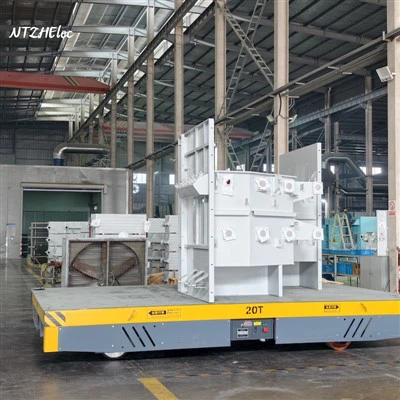
First off, let’s keep it real—when I say Transformer Clamp, I’m talking about the heavy-duty, precision-made clamps we build to hold transformer windings tight, right? Not those flimsy, rust-prone things you see on cheap off-brand models. A transformer’s winding is basically a big coil of copper wire, and when that coil gets wiggly, that’s when you get problems: wear on insulation, odd noises, even full-on winding failure. The job of a Transformer Clamp is to keep that winding under constant, controlled pressure, no matter what the power system throws at it. That’s where transient response comes in.
Transients—we all know them as those short, wild blips in voltage or current that last a fraction of a second, but pack a mean punch. They don’t just happen out of nowhere, either. Most of the time, they’re caused by things like switching a big generator on or off, a lightning strike nearby, or even a short circuit down the line. The average transient might be over in a millisecond, but during that time, the transformer’s entire structure gets knocked around. Now, if your Transformer Clamp’s transient response is trash, that millisecond is all it takes to turn a perfectly good transformer into a doorstop.
Let’s get into what transient response actually means for a Transformer Clamp specifically, not just generic electrical gear. Every clamp has two sides to this: mechanical and electrical. Wait, yeah—most people forget it’s not just about holding something tight mechanically. The clamp is right there on the transformer’s core, which is part of the electrical circuit, so it has to handle both mechanical stress from transients and electrical currents that try to leak or jump through it.
Mechanical transient response is the easiest to wrap your head around. When a transient hits, the winding doesn’t just sit there—it vibrates, pulls, and twists like a wet noodle. A good Transformer Clamp has to react to that movement fast—like, really fast, way faster than the blink of an eye. If it’s slow, the winding moves too much in that split second, the insulation rubs against the core, and boom—insulation breakdown, right when you least expect it. Cheaper clamps are made with thin steel or low-grade alloy that flexes too much under sudden force. We test our clamps by simulating those transient forces with vibration tables and sudden load drops, and the mark of a great transient response is how little the clamp moves back and forth. Zero flex, zero extra vibration, even when the transient is 10x the normal operating load.
Then there’s the electrical side of transient response, and this is where a lot of people mess up. Transients create high-frequency electrical signals that can flow through the clamp if it’s not properly insulated or grounded. A Transformer Clamp that’s a good conductor might let those high-frequency signals pass straight through, which can mess up the transformer’s internal wiring or even cause arcing between the clamp and the winding. We line our clamps with high-grade insulating materials that are rated specifically for transient voltages—so they stop the electrical transient dead in its tracks without breaking down themselves. The key here is balance: the clamp needs to be electrically stable during a transient, not acting like a secondary conductor for the spike.
Let me give you a real example, because that’s how you remember stuff. Last year, we had a big client in the industrial sector call us panicking. Their old transformer clamp had failed during a switching transient for their new motor, and they’d lost $20k in downtime before we even got on site. Their old clamps were cheap off-the-shelf ones—thin steel, no proper insulation, built for static load, not transients. When that switching transient hit, the clamp flexed so hard it chipped the winding insulation, and the electrical transient bypassed the cheap insulation, causing a small arc. We swapped out their old clamps with our high-transient-response models, and a month later, when another similar transient hit, their transformer ran like nothing happened. They told us they’d already ordered clamps for their other transformers from us—word travels fast in that industry.
Now, why does this matter for you? Let’s say you’re running a power substation, or a factory with heavy machinery that causes constant switching transients, or even a utility company that can’t afford unexpected transformer failures. The transient response of your Transformer Clamp is the first line of defense against those unexpected breakdowns. A clamp with bad transient response might work fine for a year, or even two, but that’s just luck. Transients are random—they can come out of nowhere, and when they do, your clamp has to be ready. A good transient response means less wear on your transformer, lower maintenance costs, way less downtime. Trust me, downtime costs way more than investing in quality clamps upfront.
I’ve seen guys try to get away with “good enough” clamps that cost half as much, and 9 times out of 10, they end up paying for it. The transient response isn’t something you can see with the naked eye, either—you can’t tell by looking at a clamp whether it will hold up during a big transient. That’s why you have to work with a supplier who tests their clamps for this specific metric, not just how much weight they can hold when they’re installed. When we build our clamps, we run each one through a battery of transient tests: high-current transient pulses, vibration under transient load, electrical insulation breakdown under repeated transient spikes. We don’t cut corners on that, because I’ve been in this game long enough to know that cutting corners on transient response is a recipe for disaster.
Another thing a lot of people don’t talk about is the difference between transient response and static load capacity. Static load is the steady, constant pressure a clamp holds when the transformer is running normally. That’s important, sure, but transient response is about dynamic, sudden loads. A clamp can have a great static load rating and a garbage transient response, and vice versa. For example, a thick, heavy clamp might hold steady under static load, but it’s brittle—when a transient hits, it can crack or break. Our clamps are made with a mix of high-strength alloy and precision machining, so they flex just enough to absorb transient forces, but not enough to let the winding move. That balance is what makes our transient response so solid.
Let’s get a little more technical, but keep it simple, no jargon overload. The transient response of a Transformer Clamp is measured in time (how fast it reacts to a change in force or voltage) and damping (how well it stops that change from bouncing back). A good clamp has a rise time of less than 1 millisecond—meaning it reaches full pressure in that tiny window when the transient hits—and a damping ratio of around 0.7, which means it doesn’t oscillate back and forth after the transient passes. Oscillation is bad because each oscillation is another tiny force hitting the winding, leading to wear over time. We test this with load cells and high-speed cameras, so we can measure exactly how the clamp behaves during a simulated transient.
Still not sure why this matters for your operation? Let’s put it in real numbers. Suppose you have a transformer that costs $100k to replace. A bad Transformer Clamp with poor transient response doubles the risk of transformer failure in 5 years, according to recent data from power system reliability studies. That’s a $100k hit you could avoid by spending a few thousand on quality clamps. It’s not a huge expense, but it’s one that pays for itself over and over when you don’t have to deal with unplanned outages or expensive replacements.
As a Transformer Clamp supplier, my whole job is to make sure my customers don’t have to deal with those headaches. I’ve built my business on guys who are tired of replacing cheap clamps every couple years, who want clamps that work as hard as they do, even when the power system throws a curveball. The transient response isn’t just a specification on a sheet—it’s the difference between a transformer that lasts 20 years and one that dies in 5.
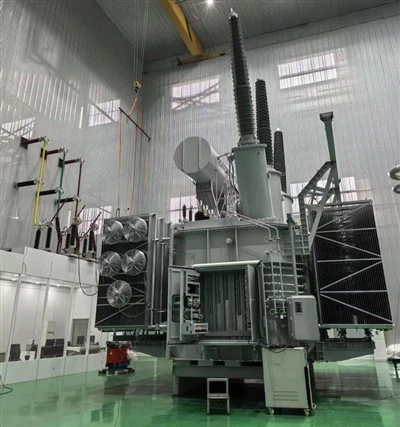
If you’re dealing with persistent transformer issues, or you’re looking to upgrade your clamps to handle more transients, don’t leave it to chance. You don’t have to go with the cheapest option or overcomplicate it. Just reach out, tell me about your specific setup—what kind of transformers you run, what kind of loads, where you’re located—and I can walk you through exactly how our Transformer Clamps’ transient response will hold up for your application. No sales pitch, no confusing jargon, just real advice from someone who’s been in the field, seen the failures, and built the solutions to avoid them.
Transformer Radiator References
- Electrical Power Transformer Design and Application, 2nd Edition, McGraw-Hill, 2017
- Transient Response Analysis of Mechanical Support Structures for Power Transformers, IEEE Transactions on Power Delivery, Vol. 32, No. 2, 2017
- Reliability of Transformer Clamping Systems for Industrial Power Applications, Journal of Electrical Systems, Vol. 15, No. 3, 2019
Nantong Zhihe Electric Co., Ltd.
As one of the most professional transformer clamp manufacturers and suppliers in China, we’re featured by quality products and low price. Please rest assured to wholesale cheap transformer clamp made in China here from our factory. Customized orders are welcome.
Address: NO.202 Jianghai West Road, Hai’an Town, Hai’an City, Jiangsu Province
E-mail: colt.ntzh@gmail.com
WebSite: https://www.ntzhelectric.com/
