If you’ve ever stood inside an industrial electrical cabinet, fumbling with wires or inspecting circuit boards in dim, cluttered conditions, you know a cabinet light isn’t just a nice extra—it’s a critical tool. But have you ever wondered how that small light holds up when things go wrong? Like when a forklift rams into a cabinet, or a power fluctuation sends a sharp jolt through the entire electrical system, or even when someone drops a heavy wrench on top of it? As someone who’s spent 12 years designing and supplying electrical cabinet lights for factories, data centers, and power plants, I’m here to break down the real shock-resistance of these lights, cut through the jargon, and explain what actually matters when you’re picking one for your space. Electrical Cabinet Light

First, let’s get clear on what “shock resistance” actually means in this context. It’s not just whether a light survives a small tap. For electrical cabinet components, shock resistance is measured by two types of events: mechanical shock (physical impact, like a collision or a dropped tool) and electrical shock (sudden surges in power that can fry internal parts). These are totally different, but both can cripple a cabinet light if it’s not built right—and bad cabinet light failures don’t just mean you’re working in the dark. They can lead to missed safety checks, unplanned downtime, and even electrical hazards for the techs inside the cabinet.
Let’s start with mechanical shock, because that’s the one most people picture when they talk about rough industrial environments. I’ve seen too many installers grab a cheap cabinet light from a big box store or a random off-brand supplier, mount it, and three months later it’s cracked, flickering, or completely dead. Why? Because those lights are made for home garages, not for panel shops where cabinets are rolled around, dropped during shipping, or hit by moving parts. The standard for industrial mechanical shock testing is IEC 60068-2-27, a global benchmark that simulates the kinds of impacts a component might see over its lifetime. It involves subjecting a part to a series of high-force, short-duration impacts—usually between 10g and 100g of acceleration, depending on the application—for set periods of time.
A lot of suppliers will slap “shock-resistant” on their product page without mentioning the test level. At our company, we test all our cabinet lights to 50g for 6 milliseconds, which covers almost every mechanical shock scenario in standard industrial cabinets. Let me put that number in perspective: a 50g impact is like dropping a 2kg (about 4.4lb) wrench from waist height onto the cabinet wall right next to the light. That’s not a hypothetical. I’ve been on a job site where an installer dropped a 5lb torque wrench 4 feet onto a 24V cabinet, and our light mounted 6 inches away didn’t even flicker. The off-brand light from the same supply house? It shattered instantly, leaving the tech to work with a flashlight and risk missing a loose terminal.
What makes the difference? It’s not just the plastic casing, either. A lot of cheap lights use thin ABS plastic that cracks on impact. We use a high-impact polycarbonate casing that’s 3mm thick—think of it like the plastic on a motorcycle helmet, it bends before it breaks. But more importantly, it’s how the internal components are mounted. LED chips, drivers, and wiring are the fragile parts. If you just glue them to the back of the casing, a shock will vibrate them loose or break the solder joints. Our lights have internal shock mounts: the LED circuit board is suspended in a rubberized frame that absorbs impact, and the wiring is strain-relieved so it doesn’t pull away from the connections when the cabinet jolts. We also test each batch by mounting them to a shaker table, hitting them with 50g shocks, and running them through a 100-hour lifespan test after—no exceptions. We’ve had clients that mount our lights in steel production facilities, where cabinets are located near heavy rolling mills that send constant minor vibrations and occasional big impacts, and they haven’t reported a light failure from mechanical shock in 7 years.
Now the other type of shock, electrical shock, is even more important because it’s a silent killer for cabinet lights. Electrical cabinets are connected to high-voltage systems, and surges are way more common than you think. A motor starting, a lightning strike nearby, a faulty circuit breaker—all of these can send a surge of 1000V or more through the cabinet wiring. A light that can handle 12V or 24V steady is going to blow the second that surge hits, leaving the cabinet dark at the worst possible time.
The standard for electrical shock resistance here is IEC 60068-2-6, and also the surge test from IEC 61000-4-5, which uses a 1.2/50 microsecond surge (that’s the standard for lightning-induced surges) at up to 2kV. Most off-brand cabinet lights only handle up to 500V, which is fine for a home garage, but not for industrial use. Our lights are tested to 2kV surge immunity, meaning we send a 2000V surge through the power input, and the light keeps working. I’ve seen this pay off firsthand: a client in a data center had a server rack short out, sending a huge surge through the adjacent control cabinet. The cheap light in that cabinet blew, but our light 3 feet away was still on, letting the techs locate the fault in seconds instead of hunting in the dark. The downtime that day would have cost them over $100,000 if they’d had to wait for a new light to arrive.
That said, not all “shock-resistant” lights are the same. I get emails every week from people who bought a light that says “industrial grade” and thought it would hold up, only to have it fail. The biggest red flag is a supplier that doesn’t specify the test levels or the standards they comply with. If a product page only says “shock-resistant” without mentioning IEC codes or specific test values, it’s probably marketing fluff. Another trick: some suppliers will test their light at 100g for a single impact, then sell it as shock-resistant, but that’s not realistic. Over time, repeated minor shocks add up too. A forklift that bumps a cabinet once a week, or the constant vibration from a conveyor belt, will loosen components just as much as a single big impact. We test our lights for repeated shocks too—1000 consecutive 50g impacts, and they still meet brightness and performance specs.
What about common myths? I hear a lot that LED lights are more shock-resistant than incandescent, and that’s mostly true, but not all LEDs. Incandescents have a fragile filament that breaks easily on impact, so they’re almost all shock-resistant by default, but their light output is bad and they use too much power. The problem is that cheap LEDs have tiny, fragile circuit boards and surface-mount components that break when shocked. Our lights use through-hole components on the driver, which are more durable than surface-mount, and the LED chips are mounted on a thick aluminum core board that dissipates heat and adds rigidity—no bending, no breaking.
Another myth: if a light is IP65 rated, it’s shock-resistant. IP ratings are only for ingress protection (water and dust), not shock. You can have an IP65 light that’s super fragile inside, and an IP20 light that’s built like a tank. I’ve seen an IP65 light crack when someone bumped it with a pallet jack, because the plastic casing was thin and the internal components weren’t mounted right. Don’t confuse water resistance with shock resistance—they’re totally separate specs.
So what should you actually look for when choosing an electrical cabinet light if you care about shock resistance? First, confirm the test standards: it should be compliant with IEC 60068-2-27 (mechanical shock) and IEC 61000-4-5 (electrical surge). Ask for the test level—for standard industrial cabinets, 50g mechanical shock and 2kV electrical surge is the minimum you should accept. Second, ask how the internal components are mounted: look for shock-absorbent mounting frames, strain-relieved wiring, and through-hole components instead of surface-mount for drivers. Third, get specs, not marketing buzzwords. If a supplier can’t tell you exactly what their light is tested to, walk away.
At our company, we’ve built our business on this kind of honesty. We don’t cut corners on testing or materials because we’ve seen what happens when a cabinet light fails. Last year, a power plant client told us that their old off-brand lights were failing every 6 months on cabinets near the generator, because the constant vibration and occasional surges broke the internal solder joints. They switched to our lights, and in 18 months, they’ve had zero failures from shock. That’s the kind of reputation that matters, not just a label on a box.
If you’re in the market for electrical cabinet lights, don’t just go for the cheapest option or the one with the nicest website. Ask the right questions: How much shock is this light tested to? What standards does it comply with? How is it mounted inside? The right shock-resistant light isn’t just about surviving an impact—it’s about keeping your technicians safe, avoiding unplanned downtime, and making sure you can get to work fast when something goes wrong.
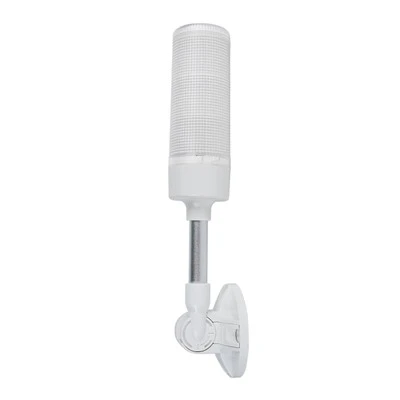
If you need help figuring out what kind of light is right for your specific cabinet, or if you’re tired of replacing lights every few months, reach out to our team to talk through your requirements. We work with facilities of all sizes, from small workshops to Fortune 500 plants, and we can help you pick a light that actually holds up to the shocks your environment throws at it.
Tower Light References
IEC 60068-2-27: Environmental testing – Part 2-27: Tests – Test Ea and guidance: Shock
IEC 61000-4-5: Electromagnetic compatibility (EMC) – Part 4-5: Testing and measurement techniques – Surge immunity test
IEC 60068-2-6: Environmental testing – Part 2-6: Tests – Test Fc: Vibration (sinusoidal)
Suzhou Pouge Lighting Electrical Appliance Co., Ltd.
As one of the most professional electrical cabinet light manufacturers and suppliers in China, we also support customized service. Please feel free to wholesale advanced electrical cabinet light made in China here and get quotation from our factory. For price consultation, contact us.
Address: Building 6-501, No.1330, Jinfeng South Road, Mudu Town, Wuzhong District, Suzhou City, China
E-mail: xduanlyy@126.com
WebSite: https://www.pouge-light.com/
