Hey there, folks! I’m a supplier of slitting and rewinding machines, and today I wanna chat about one crucial aspect – the surface finish requirement of the slitting blades in these machines. Slitting and Rewinding Machine
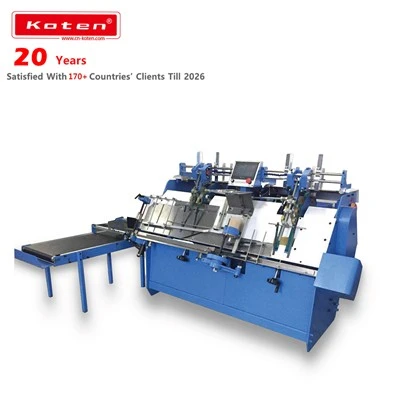
So, first off, let’s understand why the surface finish of slitting blades is a big deal. When we talk about slitting and rewinding machines, their main job is to cut materials like paper, plastics, and metals into precise widths and then rewind them onto spools. The slitting blades play the starring role here. A good surface finish on these blades can make a world of difference in the overall performance of the machine.
Now, what exactly do we mean by surface finish? It’s all about how smooth or rough the surface of the blade is. A smooth surface finish is often what we’re aiming for. Why? Well, a smooth blade surface reduces friction when it comes into contact with the material being cut. Less friction means less heat generation. And trust me, heat is the enemy in slitting operations. If the blade gets too hot, it can start to wear out faster, and it might also cause the material being cut to melt or warp, especially if we’re dealing with plastics.
For example, when we’re slitting thin plastic films, a rough blade surface can grab onto the film, causing it to stretch or tear unevenly. But a smoothly finished blade will glide through the film like a hot knife through butter, resulting in clean, precise cuts. The same goes for paper materials. A blade with a proper surface finish can slice through stacks of paper without leaving any ragged edges or causing the paper to jam in the machine.
Let’s talk about the different levels of surface finish. There are industry – standard measurements for this, usually expressed in micro – inches or micrometers. For most general slitting applications, a surface finish in the range of 8 – 16 micro – inches (about 0.2 – 0.4 micrometers) is considered pretty good. This level of smoothness allows for efficient cutting with minimal wear on the blade and excellent quality of the cut edge.
However, for more demanding applications, like slitting high – grade metals or ultra – thin films, we might need an even smoother surface finish. In these cases, we’re looking at a finish of around 4 – 8 micro – inches (0.1 – 0.2 micrometers). Achieving this level of smoothness requires some advanced manufacturing techniques, like precision grinding and polishing.
The manufacturing process of the slitting blades has a huge impact on the surface finish. When we’re making the blades, the first step is usually forging the blade blank. This gives the blade its basic shape and some initial strength. But the forging process can leave the surface a bit rough. That’s where the grinding comes in. We use different types of grinding wheels to gradually smooth out the surface, getting rid of any bumps or ridges left from forging.
After grinding, we often move on to polishing. Polishing is like the final touch. It gives the blade that mirror – like finish. There are different polishing methods, including mechanical polishing, where we use abrasive compounds and polishing wheels, and chemical polishing, which involves using chemicals to etch away the tiny surface imperfections.
But it’s not just about having a smooth surface. We also need to make sure the surface finish is consistent across the entire blade. An inconsistent finish can lead to uneven cutting performance. For instance, if one part of the blade is rougher than the rest, it might cause the material to be cut unevenly, and it could also lead to premature wear of that particular area.
The material of the blade also plays a role in determining the surface finish requirement. Different materials have different properties, and the way they interact with the cutting process is unique. For example, carbide blades are known for their hardness and wear resistance. They can maintain a sharp edge for a long time, but they also require a specific surface finish to prevent chipping. A smooth surface finish on carbide blades helps to distribute the cutting forces evenly, reducing the risk of chipping during the slitting process.
On the other hand, high – speed steel blades are more flexible compared to carbide. They can be ground and polished to a very smooth finish, and they’re often used for applications where a high degree of precision is required. However, they’re more prone to wear over time, so maintaining the right surface finish is crucial for their longevity.
Another factor to consider is the environment in which the slitting and rewinding machine operates. If the machine is used in a dusty or dirty environment, a rougher surface finish on the blade might actually be beneficial in some cases. The small surface irregularities can trap some of the dust particles, preventing them from getting between the blade and the material being cut, which could otherwise cause scratches or damage to the material.
But generally speaking, for most clean – room or controlled – environment applications, we want that super – smooth surface finish. In a clean environment, the main concern is achieving the highest quality cuts possible, and a smooth blade surface is key to that.
Now, let’s talk about how we as a slitting and rewinding machine supplier ensure that the surface finish of our blades meets the requirements. We work closely with our blade manufacturers. We have strict quality control processes in place. Before a blade is installed in one of our machines, it goes through a series of inspections. We use optical measuring devices to check the surface finish and make sure it’s within the specified tolerance.
We also conduct test cuts with the blades. This allows us to see how they perform in real – life conditions. If the cuts aren’t clean or if the blade is showing signs of excessive wear, we know there might be an issue with the surface finish, and we can take the necessary steps to correct it.
In conclusion, the surface finish of slitting blades in a slitting and rewinding machine is a critical factor that can significantly impact the performance and quality of the cutting operation. Whether you’re slitting paper, plastics, or metals, getting the right surface finish is essential for achieving clean, precise cuts, reducing blade wear, and ensuring the overall efficiency of the machine.
If you’re in the market for a slitting and rewinding machine and want to discuss how the surface finish of the blades can affect your specific application, I’d love to hear from you. Just reach out, and we can have a detailed chat about your needs and how we can provide the best solution for you.
V Bottom Paper Bag References:
- Handbook of Metal Cutting and High Performance Machining
- Principles of Modern Manufacturing: Materials, Processes, and Systems by Mikell P. Groover
Ruian Koten Machinery Co., Ltd.
Ruian Koten Machinery Co., Ltd. is one of the most professional slitting nd rewinding manufacturers and suppliers in China, featured by quality products and good price. Please rest assured to buy CE approved slitting nd rewinding made in China from our factory. Welcome to contact us for quotation.
Address: Room 2201, No. 2 Building, Rui Xiang Yi Hao, Ruixiang New Area, Ruian City, Wenzhou, Zhejiang, China.
E-mail: manager@cn-koten.com
WebSite: https://www.kotenmachinery.com/
