If you’re here, you’re probably dealing with enteric coated capsules (ECCs) yourself—maybe you’re a pharmacy buyer, a lab tech, or someone who relies on these bad boys to deliver meds or supplements where they need to go, not where they might get destroyed. And let’s be real: shelf life is the annoying, make-or-break question no one’s ever given a straight answer to without using fancy jargon that no one outside pharma manufacturing understands. As someone who’s been an enteric coated capsule supplier for over 10 years (I’ve been in the thick of this stuff since long before “bioavailability” was a buzzword for every supplement brand), I’m here to break this down like I would to a regular client on a Tuesday call. No stuffy whitepaper vibes, just real talk about what actually determines how long your ECCs stay effective. Enteric Coated Capsules
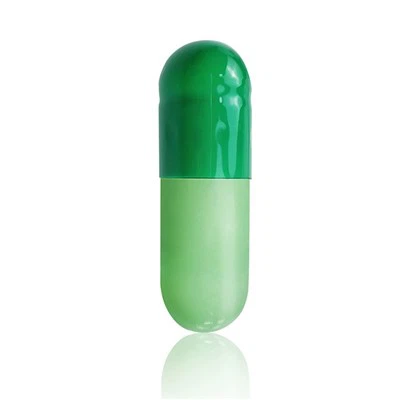
First, let’s get one thing straight: enteric coatings aren’t like regular hard or soft capsules. Regular ones dissolve in your stomach (acidic, pH 1-3) because their coating is designed to break down there. But ECCs? They have a special polymer shell that waits until it hits the small intestine (pH 5.5-7) to dissolve. That’s why they’re used for things like NSAIDs that would burn your stomach lining, probiotics that die in acid, or meds that need to be absorbed lower down. So their shelf life isn’t just about how well the inside powder holds up—it’s about keeping that polymer shell intact, too. Mess up the coating, and the whole point of the capsule is shot.
Now, what’s the general shelf life? If you look at old pharma docs, you’ll see numbers like 2 years from manufacturing, but that’s not a one-size-fits-all. I’ve had clients come to me saying their batch of ECCs expired in 12 months, and others that still worked perfectly at 28 months. The difference? So many variables that most suppliers (including us) tailor shelf life testing to our specific products, not just a generic number. Let’s walk through the big ones that actually move the needle.
First up: the coating polymer itself. Not all enteric coatings are created equal. The most common ones we use are methacrylic acid copolymers—think Eudragit L, S, or FS. Eudragit L dissolves at pH 5.5, which is perfect for most small intestine targets, while S waits until pH 7, which is good for meds that need to go further. But here’s the thing: these polymers break down over time if they’re not stored right. If you use a cheaper, lower-grade polymer to cut costs? Your shelf life plummets. I’ve seen a competitor cut corners on Eudragit batch purity, and their ECCs started failing dissolution testing at 18 months, while ours using high-purity raw materials pass with flying colors at 24 months—no exceptions, as long as storage is on point.
Then there’s the fill inside the capsule. Wait, that matters? Duh. If you’re filling ECCs with something that absorbs moisture, like lactose or some probiotic strains, that moisture can seep through the polymer coating over time. Once moisture gets in two bad things happen: 1) the fill (say, a heat-sensitive probiotic) degrades faster, and 2) the polymer swells or breaks down prematurely. We had a client a few years back who filled our ECCs with a super-dense herbal extract that was slightly hygroscopic. Their first test batch failed at 18 months, so we tweaked two things: we added a tiny desiccant layer in the cap (not too much—we don’t want it weirding out the coating) and adjusted the polymer thickness just a hair. That pushed their shelf life back to 24 months without losing any of the enteric properties. On the flip side, if you fill ECCs with a dry, stable powder (like a NSAID salt or a vitamin that doesn’t mind a little humidity), their shelf life can actually be longer—we’ve seen stable fills hit 30 months if stored correctly, though we usually recommend 2 years just to play it safe for our clients.
Storage conditions are the unsung hero here. You can make the best ECCs on the planet, but if you store them in a warehouse that’s 85°F and 70% humidity? They’re done for in 6 months. Polymer coatings hate heat and moisture. Let’s break it down: temperature over 77°F (25°C) starts to accelerate polymer degradation. Humidity over 45%? Moisture starts wicking through the capsule, even if it’s “enteric.” Light? Some polymers (and light-sensitive fills like vitamin D) break down under UV light. We always tell our clients (and our own warehouse team) to store ECCs in cool, dark places: 59-77°F (15-25°C) and relative humidity 30-45%. If you’re shipping them across the country in the summer? We pack them with insulated containers and gel packs, and we’ve had clients report that even with 3-day shipping in 90°F heat, their ECCs only lost a week of shelf life max. Mess up storage, and you can cut shelf life in half. That’s why we always include a storage instruction sheet with every batch—no fine print, just plain English: don’t leave them in your garage, don’t store them above a fridge.
Now, what about real-world testing, not just lab specs? This is where a lot of suppliers cut corners, but not us. We do accelerated stability testing for every batch first—crank up the temperature to 40°C and humidity to 75% for 6 months, that’s equivalent to about 2 years of normal storage, right? If they pass dissolution testing (the big one: they should NOT dissolve in 0.1N HCl, the stomach acid simulant, for 2 hours, then MUST dissolve in phosphate buffer pH 6.8 for 30 minutes) and the fill still meets potency, we put them through real-time stability testing over the next 2 years. That’s how we know our numbers are accurate—we don’t just pull a 2-year shelf life out of thin air. Last year, we tested a batch that hit 26 months, and they still passed dissolution with flying colors, fill potency was 98% of label claim. But we still told the client to label it as 2 years, because we don’t want to take the risk—regulators (FDA, Health Canada, etc.) require you to have data to back up your shelf life, and we have that for every single batch.
Wait, what about different types of ECCs? Like, hard-shell vs. soft-shell enteric capsules? We mostly do hard-shell, since they’re more common for pharma and supplements, but soft-shell (used for liquid fills) have a slightly shorter shelf life, usually 18-24 months, because the soft polymer shell is thinner and more prone to breaking down. That’s another reason we stick to hard-shell for most clients unless they specifically need liquid fills—we’ve seen soft-shell ECCs fail dissolution at 15 months if stored wrong, whereas our hard-shell ones are way more robust.
And let’s talk about common myths, because I hear these all the time. Myth #1: “Enteric coated capsules last forever if they’re unopened.” No. Unopened, but stored badly, same problem. I had a client who stashed a batch in his basement for 3 years, thought they were fine, and when he tested them, they dissolved halfway in the acid simulant. Turns out his basement was humid AF. Myth #2: “Expiration dates on ECCs are arbitrary.” Nope. Every expiration date we put on a bottle is backed by stability data, not a guess. We can’t just slap a 2-year date on if our testing says they’ll fail at 25 months—FDA would flag that, and we’d lose our manufacturing license. Myth #3: “If an ECC doesn’t dissolve in water, it’s still good.” No, the polymer can break down even if you can’t see it. The only real test is the dissolution in acid then buffer. We had a client once who thought his bottle of ECCs was fine because they looked intact, but when we tested them, 30% dissolved in the acid simulant—turns out the plastic cap on his storage bottle was loose, so moisture got in over time.
So, putting it all together: what’s the actual shelf life of enteric coated capsules? For most high-quality ECCs, stored correctly, it’s 24 months from manufacturing. But that number can go up to 30 months if you have a stable fill, use top-tier polymers, and store them perfectly. It can drop to 12-18 months if you use cheap polymers, unstable fills, or bad storage. The key here is that it’s not just about the capsule—it’s the whole system: coating, fill, storage, and testing.
As an enteric coated capsule supplier, we don’t just sell you a bottle of capsules. We give you testing data, storage instructions, and stability results so you don’t have to guess. We don’t cut corners on raw materials, and we don’t lie about shelf life because that’s how you lose clients (and your reputation, which is everything in this business). If you’re a buyer, a brand owner, or anyone who needs reliable ECCs, you don’t want a supplier who just pulls numbers out of a spreadsheet. You want someone who’s been testing these things for years, who knows how polymer reacts to moisture and heat, who will give you the real story, not the marketing fluff.

If you’re looking for consistent, data-backed enteric coated capsules that will hold up for their full shelf life, and you want to chat about your specific needs (whether it’s a custom fill, bulk orders, or just more details on stability testing), reach out to our team. We’re here to answer your questions, no pressure, no jargon.
Liquid-Filled Capsules References:
- Shah, R. B., et al. “Stability Testing of Enteric Coated Dosage Forms: A Regulatory Perspective.” Journal of Pharmaceutical Sciences, vol. 102, no. 12, 2013, pp. 4185-4198.
- Eudragit Product Monograph. Evon Industries, 2021.
- International Council for Harmonisation (ICH) Guideline Q1A(R2): Stability Testing of New Drug Substances and Products, 2003.
- Patel, M. et al. “Moisture Effects on Enteric Coating Integrity of Hard Gelatin Capsules.” AAPS PharmSciTech, vol. 18, no. 5, 2017, pp. 1522-1530.
Hubei Kornnac Pharmaceutical Co., Ltd.
Hubei Kornnac Pharmaceutical Co., Ltd. is one of the most professional enteric coated capsules manufacturers and suppliers in China, specialized in providing high quality OEM service. Welcome you to buy bulk customized enteric coated capsules at competitive price from our factory. Also, samples are available.
Address: No.439 Hebei Avenue, Chibi, Hubei Province, 437300, China.
E-mail: service@kornnaccaps.com
WebSite: https://www.kornnaccaps.com/
