If you’ve ever scrolled through social media and spotted a plush toy shaped like a weirdly specific thing—say, your first pet’s mismatched ears, the vintage toaster you refuse to throw away, or the fictional character you doodle on every work call—you’ve probably wondered: Can I actually get a custom plush with a unique shape? Custom Plush
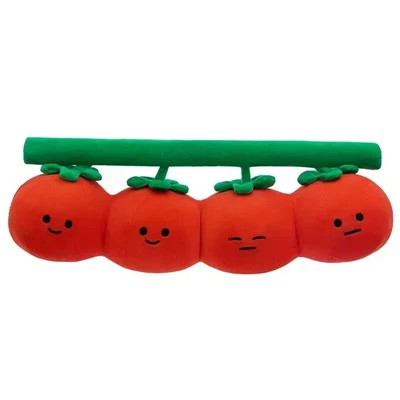
As someone who’s spent the last 12 years running a custom plush manufacturing studio, I answer that question at least 10 times a week, and the short answer is: Absolutely. But the longer, more honest answer? It depends on how you approach the process, because unique shapes aren’t just about buying extra stuffing or cutting fabric differently—they’re about balancing your vision with the practical limits of plush construction, material science, and small-batch manufacturing. I’ve seen would-be clients come in with a napkin sketch of a platypus made of lemon slices, and I’ve walked someone through turning a photo of their late grandma’s hand into a plush pillow that fits in their jacket pocket. Let’s break down how this works, no corporate jargon, no AI-generated generic tips—just what I’ve learned from hundreds of custom orders.
First, let’s get one myth out of the way: A “unique shape” doesn’t have to mean impossible. Too often, people come to me thinking a custom plush has to be a brand-new original creature with 17 extra limbs, but that’s not true. A unique shape can be as simple as a favorite guitar’s silhouette, a vintage camera’s exact curves, or even a partial replica of a tattoo someone has on their wrist. The key here is knowing when a shape is “doable” vs. a fun idea that needs a little tweak. For example, I once had a client who wanted a plush of a dragon with wings that folded up like origami; at first, the seams kept catching because the edges were too thin, so we adjusted the wing shape to have a ¼-inch wide base instead of a razor-thin edge, and it worked perfectly. That’s the kind of small, practical adjustment that makes a unique shape actually function, not just look cool.
Now, let’s talk about the science behind shaping plush toys, because that’s where a lot of people get tripped up. Plush toys are made from two main types of fabric: short-pile (most standard, like the fuzzy stuff you see on teddy bears) and long-pile (shaggy, used for things like dogs or monsters). The pile length affects how detailed a shape can be, because a longer pile will make small edges or curves look blurry. If you want a super detailed unique shape—like a plush of a cartoon character with tiny freckles on its face or a specific patterned scarf—short-pile fabric is your best bet, because it can hold fine stitches and small appliqués without losing definition. We also use different types of stuffing: polyfill for soft, squishy shapes, and a more rigid, molded foam for shapes that need to hold their form, like a plush of a bicycle or a toolbox. For example, a client wanted a plush of their beat-up skateboard, and the curved deck kept collapsing when we used regular polyfill, so we lined the inside with a thin piece of molded foam that matched the deck’s shape. That’s the kind of material choice that makes a unique shape feel true to the original, not a lumpy copy.
I also want to address the elephant in the room when it comes to unique shapes: cost. A lot of people assume custom plush is way more expensive than mass-produced toys, and to an extent, that’s true, but not for the reasons you might think. When you make a plush with a unique shape, you’re not paying for a fancy factory or extra labor—you’re paying for the custom tools we need to cut the fabric. For mass-produced toys, factories use steel cutting dies that cost hundreds of dollars, and they make thousands of the same shape at once. For a unique custom shape, we use custom die-cutting tools, but for small orders (like 50 or 100 pieces, which is what most individuals or small businesses order), the cost per piece goes down because we can use a hybrid method: a custom die for the main shape, and hand-cutting for small details like eyes or buttons. I’ve seen a client pay $15 per plush for a small order of 20 custom cat-shaped plush, and a mass-produced generic cat plush costs $8, but that’s because our cat had a missing ear and a tiny bow that we couldn’t get from a standard die. The difference is in the uniqueness, not the shape itself.
Another common question is: Can I use a photo as a reference? The answer is almost always yes, but you have to pick the right photos. I once had a client send a 10-year-old blurry photo of their childhood stuffed rabbit that had lost one eye and a button nose, and she wanted a custom plush of it. The photo was so blurry we could barely make out the rabbit’s shape, so we had her send a photo of the actual rabbit (which she still had tucked in a closet) and a note about the little details—like the rabbit’s right ear was slightly longer than the left, and the nose was a faded pink. That’s the stuff that makes a unique shape feel personal, not just a generic plush. If you’re sending a photo reference, make sure it’s well-lit, shows the full shape of what you want, and has close-ups of any specific details—like a tattoo, a scar, or a favorite pattern.
Now, let’s talk about what’s not doable, because I don’t want to give false hope. You can’t get a custom plush with a shape that has sharp, hard angles (like a tiny knife or a jagged rock) because plush fabric is soft, and sharp edges will fray or poke through. You also can’t get a shape that’s too small to manipulate—something smaller than 3 inches tall will end up lumpy and hard to stitch, because the fabric is too small to work with. I had a client once who wanted a custom plush of a pinhead dinosaur, and it was 2 inches tall; we tried, but the eyes and legs kept falling off because there wasn’t enough space to stitch them securely, so we suggested a 4-inch version instead, and she loved it. The goal here is to make a plush that’s not just a copy of your vision, but something that’s actually durable and fun to hold, so small adjustments make a huge difference.
I’ve been in this business long enough to know that the best custom plush orders aren’t the ones with the most outlandish shapes—they’re the ones that mean something to the client. I made a custom plush of a client’s late cat, Mochi, which had a patch of white fur on its chest and a curled tail; she cried when she saw it, because it looked exactly like the cat she’d had for 12 years. Another client, a small café owner, ordered 100 custom plush lattes to give to regulars as a thank-you gift, and the unique shape of the latte cup (with a little foam top and a cinnamon stick) was perfect because it tied into their brand. Those are the orders that stick with me, and they prove that a unique shape isn’t just a design choice—it’s a way to hold onto a memory, celebrate a hobby, or make a small business feel personal.
If you’re thinking about getting a custom plush with a unique shape, here’s what I recommend doing first. Start by writing down exactly what you want: is it a copy of a beloved pet, a fictional character, a favorite object, or something you made up? Gather photos or sketches, and note any specific details that matter—color, small marks, shape quirks. Then, reach out to a supplier who specializes in custom plush (not the big mass-produced brands, because they won’t work with your specific shape). Be honest about your budget and your order size, because that will help them give you an accurate timeline and price. Most small custom plush suppliers can make a prototype in 1-2 weeks, so you can see the shape before you commit to a full order, which is a big plus.
Wait, let me circle back to one thing I touched on earlier: the difference between a unique shape and a weird shape. I’ve had clients come to me with ideas that are technically possible, but not practical—like a plush of a 1980s Rubik’s Cube that’s perfectly cubic, not rounded at the edges. The problem with that is, a perfectly cubic plush will be hard to cuddle, and the seams will be under a lot of pressure, so it might fall apart after a few uses. So we adjust the shape to be slightly rounded, which keeps the unique look of a Rubik’s Cube but makes it functional. That’s the balance I always try to strike: your vision comes first, but we’ll make small tweaks so your plush is something you can actually play with or display for years.
I also want to address the myth that custom plush is only for big orders. I get a lot of individuals who want one custom plush—like a gift for a partner’s birthday, or a plush of their kid’s drawing—and that’s totally doable. For a single plush, we usually hand-cut the shape instead of using a custom die, so the cost is a bit higher (usually $50-$100, depending on size and details) but it’s worth it for something one-of-a-kind. I once made a single plush of a client’s partner’s favorite video game character, which had a weirdly shaped sword and a tuft of blue hair; she said it was the best gift she’d ever given, because it was made just for her.

At the end of the day, the question “Can I get a custom plush with a unique shape?” boils down to this: as long as your shape is soft enough to work with, not too small, and meaningful to you, the answer is yes. You don’t have to be a designer or have a perfect sketch—we can help you turn your idea into something tangible. If you’re ready to bring your unique shape to life, reach out to us to discuss your project, and we’ll walk you through every step, from initial design to prototype to delivery.
Koala Plush Toy References:
- Textile Institute. (2021). Construction and Performance of Plush Toys. Manchester: Textile Institute Publications.
- Consumer Product Safety Commission. (2022). Safety Standards for Stuffed Toys: Durability and Shape Considerations. Washington, D.C.: U.S. Consumer Product Safety Commission.
- International Plush Toy Manufacturers Association. (2023). Small-Batch Custom Plush: Design and Production Guidelines. Tokyo: IPTA Press.
Yangzhou Beyman Toys Co., Ltd.
We are one of the most professional custom plush manufacturers and suppliers in China, specialized in providing high quality custom service and OEM&ODM service. We warmly welcome you to wholesale bulk custom plush made in China here from our factory.
Address: Room 305, North Bldg, 4 Bldg, Chuangfu Factory, No. 158, Jiannan Road, Hi-Tech Development Zone, Yangzhou City, Jiangsu Province, China.
E-mail: janzen3@beyman.cn
WebSite: https://www.plushtoyschina.com/
