When I first started working in the industrial mixing equipment space almost 18 years ago, I quickly learned that choosing the wrong high-speed mixer isn’t just a minor inconvenience—it can derail entire production runs, waste hundreds of thousands of dollars in raw materials, and even compromise product quality in ways that take months to fix. Back then, I sold mixers out of a small garage, and I’d listen to factory managers tell me horror stories: batches of paint that separated before they even hit the assembly line, pharmaceutical powders that clumped into unusable masses, food products that had inconsistent texture because the mixer couldn’t handle high-viscosity ingredients. These stories shaped how I approach every customer conversation today. Now, as a supplier who’s worked with thousands of operations across food, pharma, chemical, and cosmetics industries, I want to break down exactly how to choose a high-speed mixer that fits your needs—no sales pitch, just practical advice rooted in what we’ve seen work (and fail) over the years. High Speed Mixer
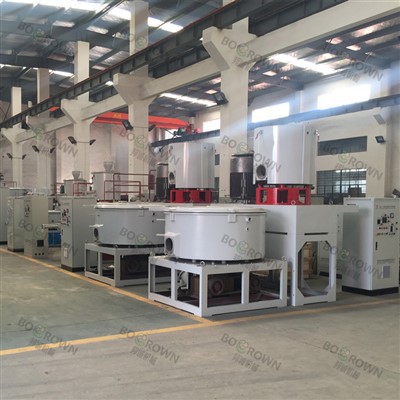
First, let’s start with the basics: what a high-speed mixer actually does, and why it’s different from a standard low-speed blender. A lot of people mix these two up, and that’s where the first mistake happens. High-speed mixers operate at tip speeds of 1,000 to 15,000 feet per minute, depending on the model, and they use both mechanical shear and high-velocity flow to break down particles, disperse powders into liquids, and create emulsions that wouldn’t form with slower equipment. If you’re mixing heavy-duty materials like ceramic glazes, adhesives, or even certain types of cosmetic creams, that shear force isn’t just a nice-to-have—it’s non-negotiable. But before you even look at specs, you need to nail down three core factors: your product’s viscosity, your batch size, and your desired outcome.
Let’s talk about product viscosity first, because this is the single biggest variable that will narrow down your mixer options. Viscosity is just a fancy word for how “thick” a material is—water is low viscosity, honey is medium, and a thick polymer paste is high viscosity. If you’re working with low-viscosity materials (like liquid soaps, paints, or beverage syrups), a high-speed disperser (HSD) is usually your best bet. These mixers have a disc-shaped blade with slots that spin at high speed, creating a vortex that pulls material into the center of the mixer and flings it outward, dispersing powders evenly. But if you’re dealing with medium to high viscosity (like ointments, putties, or food doughs), you’ll need a different type: often a high-speed change-can mixer or a planetary high-speed mixer. I remember a customer in the cosmetic industry who came to us two years ago—they’d been using a standard HSD for their lip balm base, which is a medium-viscosity blend of waxes and oils. The HSD couldn’t generate enough shear, so every batch had tiny, undispersed wax clumps that made the lip balm gritty. Swapping to a planetary high-speed mixer, which combines high-speed blade rotation with orbital movement to move thick material through the vessel, fixed their problem immediately. They cut their defect rate by 90% in the first month alone. That’s the kind of return on investment that makes the right choice matter.
Next, batch size. This isn’t just about picking a mixer that holds your current batch—you need to think about growth, too. I’ve seen too many companies buy a mixer that’s perfect for their small 50-gallon batches now, only to outgrow it in 12 months and have to fork over 30-50% more money for a larger unit. But sizing too big is a problem, too: a mixer that’s designed for 500-gallon batches will waste energy on small runs, and the extra space in the vessel can create dead zones where material doesn’t mix properly. The rule of thumb we recommend (and it’s a rule we’ve tested hundreds of times) is to choose a mixer with a working capacity that’s 150-200% of your average batch size. So if you typically run 100 gallons, a 150-200 gallon mixer is ideal. That gives you room to scale without overbuying, and it means you can run test batches or small specialty orders without struggling with underfilling the vessel. One of our regular chemical clients makes custom industrial coatings; they now use a 200-gallon mixer for their average 100-gallon batches, and when they landed a big 1,000-gallon order last quarter, they rented a temporary 1,000-gallon mixer through our referral network instead of shelling out for a new unit. It saved them over $20,000, and they still got the consistent mix they needed.
Then there’s your desired outcome. What are you trying to achieve with the mixer? Are you just dispersing a powder into a liquid, or do you need to create an emulsion that won’t separate after packaging? Are you breaking down agglomerates in a dry powder, or are you homogenizing a mixture for pharmaceutical use where every particle has to be the exact same size? This is where the technical specs come into play, but you don’t have to be an engineer to understand them. Let’s say you’re dispersing titanium dioxide into a water-based paint—this is a classic solid-liquid dispersion. For this, you need a mixer with enough power to create the high shear that breaks down the agglomerates of titanium dioxide. We’ve found that a 5-horsepower HSD works for batches up to 50 gallons, while a 10-horsepower unit is better for 100 gallons. If you’re making a mayonnaise, which is an oil-in-water emulsion, you need a mixer that can create a very fine, uniform dispersion of oil droplets—too little shear, and the mayo will separate in the jar. For that, a high-speed emulsifier mixer, which has a rotor-stator design that generates even higher shear than a standard HSD, is the right choice. We worked with a food manufacturer last year that switched from a regular HSD to an emulsifier for their artisanal mayo; their shelf life went from 30 days to 60 days, because the emulsion was so stable. That’s a direct result of matching the mixer type to the end goal.
Now, once you’ve narrowed down your options based on viscosity, batch size, and outcome, there are a few more factors that people often overlook, but that can make or break your experience with a mixer: vessel design, blade material, and safety features. Let’s start with vessel design. The most common vessel for high-speed mixers is a jacketed vessel, which allows you to control temperature during mixing. That’s critical for products that react to heat—like certain pharmaceutical powders that can degrade if the mixer gets too hot, or cosmetics that need to stay at a specific temperature to avoid separating. If your process requires temperature control, make sure the mixer you choose is compatible with a jacketed vessel, or that the supplier can integrate one for you. We offer customizable jacketed vessels for exactly this reason—some customers run batches that generate a lot of heat from the mixing process, and a jacket with cold water circulation keeps the material at the exact temperature they need.
Blade material is another big one, especially for food, pharma, and cosmetic industries where hygiene is non-negotiable. You don’t want a blade that will corrode or leach chemicals into your product. The standard here is 316 stainless steel, which is resistant to corrosion, easy to clean, and meets food and pharmaceutical safety standards. Some cheaper mixers use 304 stainless steel, which is fine for some chemical applications, but not for products that come into contact with consumers. I’ve seen a cosmetic company get a bad batch back from their manufacturer because the mixer blade was 304 stainless, and a chemical leached into their cream—cost them thousands in returns and damaged their brand reputation. So always ask about blade material: if you’re in a regulated industry, confirm that it meets FDA or GMP standards.
Safety features might seem boring, but they’re essential for preventing workplace accidents. High-speed mixers spin at thousands of RPM, so loose clothing, jewelry, or even fingers can get caught. Look for mixers with emergency stop buttons that are easily accessible, interlocking guards that prevent the mixer from running if the vessel is open, and speed control mechanisms that let you adjust the RPM as needed. We’ve had customers who skipped safety features and had a near-miss when a batch of chemical splashed out because the guard was missing. It’s a small investment for something that could prevent a serious injury.
Now, here’s a common question we get: should you go with a standard off-the-shelf mixer, or a custom one? For most small to mid-sized operations, an off-the-shelf unit works perfectly. We carry a range of standard high-speed mixers that fit 50 to 500-gallon batches, with adjustable horsepower and blade types, and they’re ready to ship within two weeks. But if you have a very specific need—like mixing a material that’s extra high viscosity, or a batch size that’s smaller than 50 gallons or larger than 500 gallons, or a unique vessel shape for your production line—then a custom mixer is worth the investment. One of our clients makes industrial adhesives for aerospace; their process requires a mixer that can handle a 1,000-gallon batch of a very heavy, high-viscosity epoxy, and they needed the mixer to fit into a specific corner of their factory. We worked with them to design a custom unit with a reinforced base to support the weight, a special blade for high-shear mixing, and a compact footprint that fit their space. It cost 20% more than an off-the-shelf unit, but it’s been running flawlessly for three years, and they wouldn’t have been able to use a standard model.
I also want to talk about testing, because this is a step that so many people skip before buying a mixer. A good supplier will let you run a test batch of your material in their demo lab before you commit to buying. We have a full demo facility where customers can bring their raw materials, run a batch in our mixers, and see exactly how it performs. This is invaluable. Last year, a customer in the ceramic industry was torn between two mixers for their glaze—they thought one would work, but when they tested both, the other mixer created a glaze with a much finer particle size, which meant their final product had a smoother finish and less cracking in the kiln. They ended up choosing the second mixer, and they saved themselves from a mistake that would have cost them thousands in reworked batches. If a supplier won’t let you test, that’s a red flag—they’re more interested in making a sale than making sure you get the right equipment.
Maintenance is another thing people often overlook when choosing a high-speed mixer. A mixer is a piece of industrial equipment, and like any machine, it needs regular upkeep to last. Ask the supplier what kind of maintenance the mixer requires, and where you can get replacement parts. Some cheap mixers use obscure parts that you can only get from the original manufacturer, and if that manufacturer is slow or out of business, you’ll be stuck with a broken mixer. Our mixers use standard, industry-available parts, and we offer a one-year warranty on all units, plus a maintenance service plan where our technicians can come to your facility to service your mixer twice a year. We also have a 24/7 support line, so if you have a problem with your mixer at 2 a.m. before a big production run, we’re there to help.
Let’s wrap this up with a real example that ties all these points together. A few months ago, a small craft brewery came to us with a problem: they were adding hops and flavor extracts to their beer, but the standard mixer they were using was leaving clumps of hops that made the beer cloudy. They were running 50-gallon batches, their product is low-viscosity beer, and their desired outcome was a clear, consistent flavored beer. We recommended a 5-horsepower high-speed disperser with a disc blade, sized for their 50-gallon batches (so it’s slightly larger than their current unit, giving them room to scale when they expand next year), made with 316 stainless steel for hygiene, and compatible with their existing jacketed vessel for temperature control. We let them test a batch in our demo lab, and when they ran their beer through the mixer, the hops dispersed completely, no clumps, and the beer was clear. They bought the unit, and they’ve since told us their repeat sales for flavored beer are up 25% because of the consistent quality. That’s exactly what we want for every customer: equipment that solves a real problem, fits their needs, and grows with them.
At the end of the day, choosing a high-speed mixer isn’t about picking the most expensive unit, or the one with the fanciest specs. It’s about understanding your own needs—your material’s viscosity, your batch size, your desired outcome—and matching that to a mixer that’s reliable, safe, and easy to maintain. Too many customers get caught up in sales tactics, but at the end of the day, the right mixer will save you money on wasted materials, reduce defects, and make your production process smoother.
If you’re ready to talk through your specific needs, whether you’re a small operation just starting out or a large manufacturer looking to upgrade your mixing equipment, we’re here to help. We can walk you through the different types of mixers, answer your questions about specs, and even arrange a test run in our demo lab. Don’t settle for a mixer that doesn’t fit your needs—let’s find the right one for your process.
PVC Automatic Compounding and Feeding System References:
- American Society of Mechanical Engineers. (2021). Industrial Mixing Equipment: Selection, Design, and Operation. ASME Press.
- Food and Drug Administration. (2022). GMP Requirements for Mixing Equipment in Food and Pharmaceutical Manufacturing. FDA Center for Food Safety and Applied Nutrition.
- Schofield, S. (2019). High-Speed Mixers: A Guide to Specifying for Process Industries. Industrial Press Inc.
- National Sanitation Foundation. (2020). Standards for Stainless Steel Equipment in Food Processing Facilities. NSF International.
ZJG BC Machinery Co., Ltd.
As one of the most professional high speed mixer manufacturers and suppliers in China, we’re featured by quality products and good price. Please rest assured to buy cost-efficient high speed mixer for sale here from our factory. Contact us for custom service and OEM service.
Address: No.8 Lexi Road, Leyu Town, Zhangjiagang City
E-mail: sales@bcextruder.com
WebSite: https://www.bcextruder.com/
